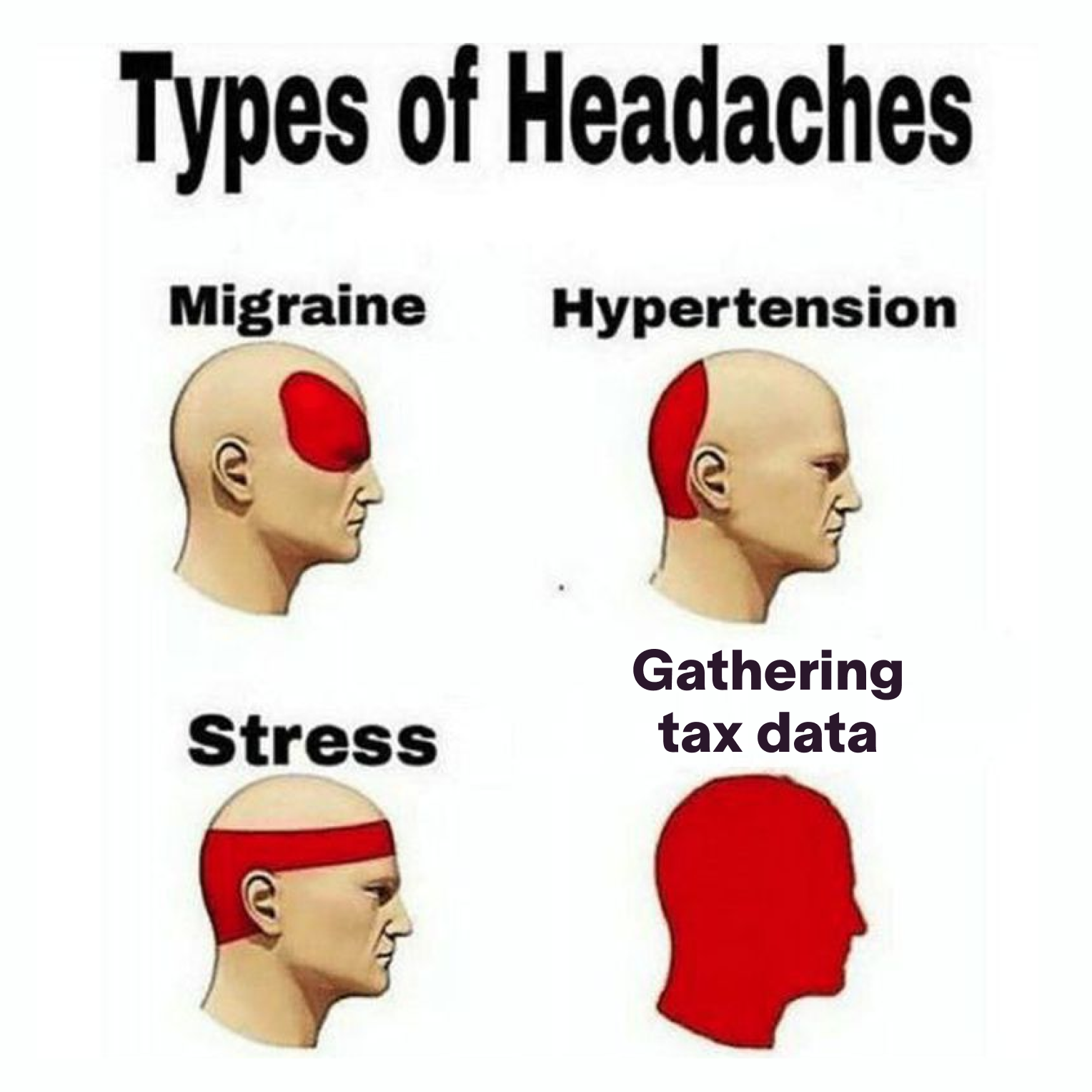
Gathering data headaches
Data-driven decision-making for tax is hyper-important 🎯. Here is the problem ⤵:
We typically don’t have the data we require. Or it takes us ages to get it, and thus we lose momentum. Or the quality is off. I have been there. Multiple times.
If you also regularly experience data headaches that feel like a combination of migraine and stress pains, and anything in between, here are some useful recommendations:
1. Tax compliance is a very rich and important data source. I am talking about tax compliance in its most extensive form. Corporate income tax filings, tax provision and reporting, indirect tax filing, TP compliance… But also more unusual suspects like WHT, the stat accounts, or any local or environmental taxes. Given the high amount of valuable data points included in it, tax teams should double down on capturing data from these compliance activities;
2. The data we require comes from multiple sources, from multiple owners, in different formats and different qualities. Be mindful of this, anticipate to these challenges. It is what it is. Forewarned is forearmed;
3. Focus not only on collecting the data, but even more on storing the data. I am talking about the value of having a structured tax data repository. Sure, SharePoint is flexible and looks like the most straightforward solution. However, (i) SharePoint cannot deal in itself with the complexity of the multiple tax domains and (ii) SharePoint is not structured enough to let the data speak for itself. Not to mention (iii) the significant “jungle” and “naming convention” risks that exist. Such a SharePoint-Frankenstein comes at a significant development and maintenance cost. Invest instead in a proper data storage solution. You won’t regret it;
4. Begin with the end in mind. What are the most important tax KPIs set by the CFO? What is the data most frequently required to support the business? What are time-consuming periodical reportings you are struggling with? Take a step-by-step data approach, and try to increase your data maturity year over year. Ensure that you can handle your most priority data challenges first;
5. Mind data traps: compliance data sits often with local owners, like local advisors or local finance people. Ensure it becomes readily available to you as well. Secondly, mind that data often is trapped in returns, assessment notices or similar documents. Don’t shy away from exploring next-gen technologies, like AI-powered document processing technologies.
Harness your data for global tax success. Go for it!